
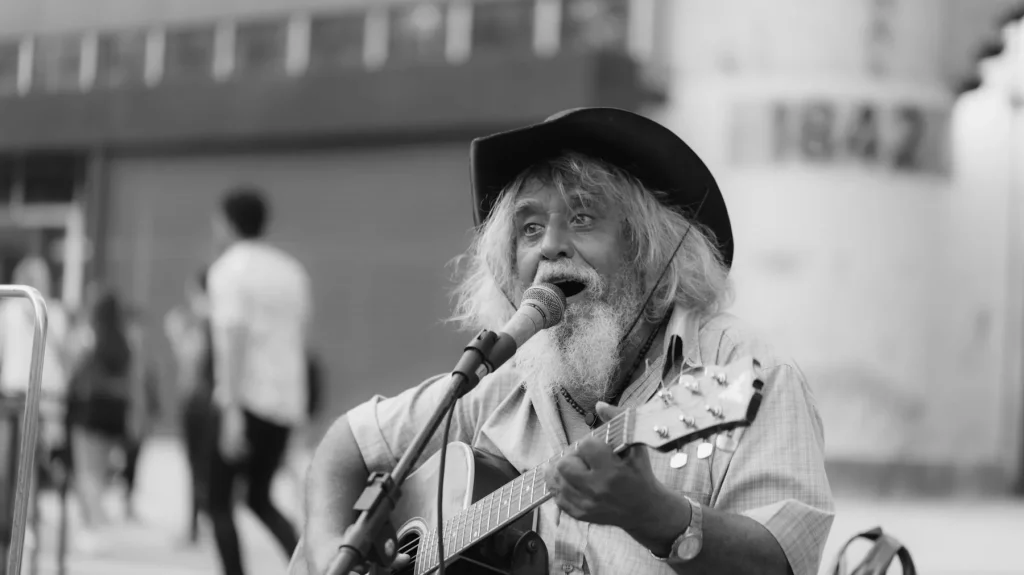
Bob Dylan, born Robert Allen Zimmerman, was born on May 24, 1941, in Duluth, Minnesota. His youth was full of vitality and influences. These experiences forged the folk legend the world loves today.
The story of Bob Dylan is rich and fascinating. He grew up in Hibbing and began his career in the world of folk music. This article explores how his roots and influences helped create the artist we know.
For more details about Dylan’s impact on music and culture, see this relevant source.
Bob Dylan’s Origins
The origins of Bob Dylan are deeply rooted in a fascinating family history. He was born in Duluth on May 24, 1941. His Jewish family, descended from Eastern European immigrants, played a central role in his upbringing.
His paternal grandfather fled Odessa and found refuge in Duluth. His family settled there in search of a better future.
His Family and Jewish Roots
Beatrice Stone and Abraham Zimmerman married in 1934. Their story was steeped in Jewish traditions that influenced Dylan’s environment.
Jewish celebrations, stories and beliefs shaped his identity from an early age.
Moving to Hibbing and His Childhood There
In 1947, the family moved to Hibbing, a small mining town in Minnesota. This marked the beginning of Dylan’s childhood in the town.
In Hibbing, he discovered a vibrant music scene. He formed bands such as the Shadow Blasters and the Golden Chords.
In 1957, he sang “Rock and Roll Is Here to Stay” at Hibbing High School. The principal cut off his microphone, making the event especially memorable.
In Hibbing, Dylan met people and had experiences that nurtured his talent. He worked above Gray’s Drugstore while pursuing his musical dream.
After graduating in 1959, Dylan decided to attend the University of Minnesota in Minneapolis. He was ready to embrace new artistic opportunities.
The Musical Influences of Bob Dylan’s Youth
Bob Dylan’s youth was marked by a wide range of musical influences. They shaped his artistic identity. He grew up in an environment where country music featured prominently.
He was particularly influenced by iconic singers such as Hank Williams. This discovery awakened his passion for music. He explored various genres, including the blues.
Country Music and Iconic Singers
Bob Dylan’s first steps in music were heavily inspired by the blues and country music. Artists such as Muddy Waters and Howlin’ Wolf enriched his musical education.
In his youth, Dylan played songs by these icons in school bands. He also traded records with his friends, allowing him to broaden his musical knowledge.
The Impact of Blues and Rock
The rock of the 1950s, embodied by figures such as Elvis Presley and Buddy Holly, influenced his musical style. The influence of the blues and rock can be heard in his compositions.
These influences marked his early days in New York’s folk scene. To learn more about his musical journey, see this insightful resource, which details his evolution. The legacy of these influences remained tangible throughout his career.

Discovering Folk Music
A vibrant music scene was emerging in Minneapolis. It was there that Bob Dylan discovered folk music. This period marked a turning point in Bob Dylan’s youth. He immersed himself in a folk movement that celebrated American musical traditions.
Coffeehouses became the setting for his first steps in the genre. They offered an intimate atmosphere that was perfect for his debut performances.
Encountering the Folk Movement in Minneapolis
After moving to Minneapolis to study, Dylan was drawn to the folk movement. He discovered inspiring artists who nourished his creativity.
He explored the sounds and stories of the folk landscape. This new musical current allowed him to become familiar with its defining elements.
His First Coffeehouse Concerts
Bob Dylan’s first concerts at venues such as The Scholar and The Purple Onion proved decisive. They gave him a stage on which to experiment. There, he performed songs that would shape his style.
Thanks to this scene, folk music became more than a simple interest. It shaped the artist he was about to become.
Performing for a growing audience, Dylan sealed his musical destiny. He honored tradition while paving the way for new creations. Folk music influences film soundtracks, heightening the emotions conveyed by their stories.
Young Bob Dylan: How the Legend Began
Bob Dylan, known by his famous stage name, became an iconic figure in modern music. His serious beginnings in the music world are more than mere anecdotes from the past. They represent the first steps in his exceptional musical career. This young American singer established himself through a unique style and unwavering determination.
Adopting the Name Bob Dylan
A native of Minnesota, Bob Dylan adopted this stage name as a tribute to the Welsh writer Dylan Thomas. This change of surname marked a turning point in his life. His choice was not merely about image; it also represented the transition to a new artistic identity that allowed him to establish himself in the world of folk music.
His Serious Beginnings in Music
Dylan’s serious beginnings took place in folk coffeehouses, where he captivated audiences with his original compositions. These performances opened the door to recording and laid the foundations of his musical career. Through these shows, the young American singer embarked on a musical adventure that would lead him to become a living legend.

Bob Dylan’s Formative Years and Journey
Bob Dylan’s time at the University of Minnesota was essential. There, he explored folk music and the artistic movements of his era. These experiences helped him become the artist we know.
University Enrollment and Artistic Exploration
At university, Dylan discovered the folk world. This encouraged him to write and compose. These formative years were crucial to his art.
His First Recordings and Recognition
Dylan’s first albums marked the beginning of his recording career. Through his concerts, he quickly gained popularity. These moments helped make him a recognized name in the music world.
These concerts attracted a wider audience. Interviews, such as the one he gave to Playboy in February 1966, helped his career gain momentum.