
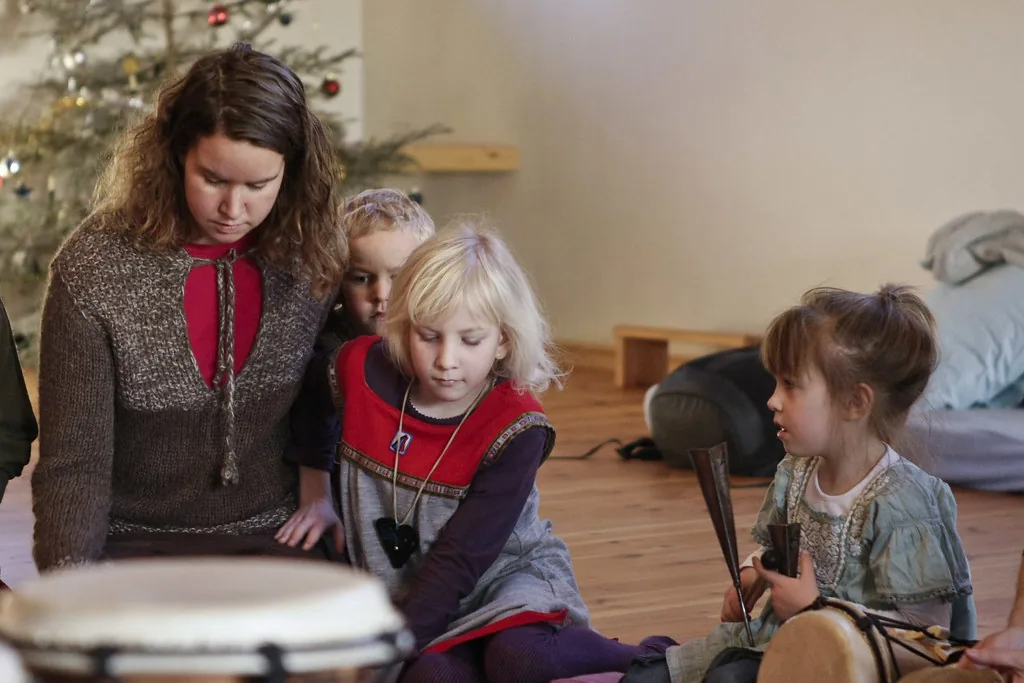
Welcome to this comprehensive guide to discovering the djembe, a fascinating instrument from West Africa. This learning path is specially designed to support new percussionists. It uses a structured approach that lets you learn at your own pace, without pressure.
Striking techniques, body positions, and regular practice are the foundations of this method. The main goal is to develop your musicality and confidence while helping you become an independent player. Each section of this guide covers essential topics such as choosing an instrument, posture, and traditional rhythms.
Daily practice is essential for building solid foundations. It will prepare you to move on to more advanced techniques. Approach each stage as a rewarding part of your musical journey, whether you play for pleasure or pursue more intensive practice.
Introduction: why learn the djembe?
The djembe is much more than a simple percussion instrument. It offers a genuine musical adventure that immerses us in the cultural riches of West Africa. By learning to play this instrument, you connect with ancestral traditions while developing your own style.
Playing the djembe offers many benefits, especially for those who choose to learn independently. This method provides unrivaled flexibility. You can arrange your sessions around your schedule and musical aspirations. Unlike group lessons, there is no pressure. You explore each sound at your own pace.
Here are a few reasons why learning this instrument is so rewarding:
- The djembe, an iconic instrument, has been used for centuries in ceremonies and celebrations to convey messages and celebrate life.
- It embodies the spirit of Manding traditions, a musical heritage passed down by masters such as Mamady Keïta.
- The djembe’s unique sounds, ranging from deep bass notes to high slaps, provide a varied musical experience even for beginners.
- Solo practice develops your personal creativity and lets you progress at your own pace.
- Every milestone in your learning becomes a personal victory, strengthening your motivation and passion for music.
- You form a deep connection with your instrument, turning every session into a moment of personal expression.
As one percussionist with ten years of experience explains:
“My playing evolved with my personality. Playing solo allowed me to develop a unique style.”
In short, learning to play the djembe is a life-enriching adventure. It is a way to discover not only music but also yourself. Those who want to take their learning further can use resources such as video tutorials and specialist books.
Choosing the right djembe to get started
Choosing the right djembe is essential when beginning your musical adventure. Your choice will affect not only your playing comfort but also the quality of the sounds you produce. Here are some practical tips to help you select your instrument.
Beginner-friendly size and weight criteria
The ideal size for an adult is 60 cm tall and 30 cm in diameter. These dimensions ensure optimal playing comfort and good resonance. The recommended weight for this percussion instrument is between 8 and 12 kg. A djembe that is too heavy can quickly tire the musician, while an overly light model may lack stability.
Wood species and drumhead quality
The choice of wood is also crucial. Lenke is lightweight and produces a clear sound, but it is less durable. By contrast, mahogany is denser, produces a deep sound, and lasts longer. Other traditional woods, such as teak and djalla, each offer distinct tones.
For the drumhead, choose natural goatskin or antelope hide to obtain a rich sound. Avoid synthetic PVC heads, which often produce less expressive tones.
The importance of tuning for optimal sound
A good djembe should vibrate for at least 3 seconds after a strike, indicating good sound projection. Be sure to check the drumhead tension regularly. Learning basic rope-adjustment techniques is essential for achieving optimal sound.
Finally, measure the space between your knees and the floor, which should ideally be 40 to 50 cm, to ensure that the djembe is positioned correctly while you play. Regular maintenance with beeswax protects the wood and drumhead, helping the instrument last longer.
Fundamental postures and positions for comfortable playing
To get the most from your experience with this instrument, adopting the correct posture is essential. Good posture not only prevents strain but also improves your comfort while playing. Here are some practical tips to help you position yourself correctly.
Seated position: stability, comfort, and instrument angle
When seated, choose a chair without armrests. This allows you to keep your back straight and your feet flat on the floor. The position provides optimal stability while you play.
Tilt the instrument toward you at 45°. This gives your hands natural, fluid access to the entire drumhead. The correct angle helps you perform the various strokes effortlessly.
Make sure your weight is distributed evenly across the chair. This prevents pressure points and allows you to practice longer without fatigue. Before you begin, warm up your wrists with gentle rotations. This prepares your joints and reduces the risk of injury.
Standing with a strap: mobility and balance
If you prefer to play standing up, adjust the strap to navel height. This ensures excellent balance and easy access to the instrument without compromising the quality of your playing. Choose cotton straps, as they are more comfortable than nylon ones, especially during long sessions.
Keep your feet shoulder-width apart. This anchors your body firmly to the ground and promotes freedom of movement while maintaining your balance. Remember to breathe from your diaphragm. Synchronizing your breathing with your strokes helps you maintain the rhythm without tension.
Finally, avoid raising your shoulders while playing. Doing so can cause soreness and limit the flexibility of your movements. Also test several drumhead-tension settings to suit your posture. Your body position affects how you perceive the sound and the quality of your strokes.
Djembe exercises for beginners: the basic strokes
Mastering the fundamental strokes is essential for anyone who wants to progress on this percussion instrument. Every sound you produce depends on the position of your hands and where you strike. In this section, we will explore three basic strokes: bass, tone, and slap.
The bass stroke: low sound and hand placement
To perform the bass stroke, place the palm of your hand in the center of the drumhead. This technique generates a deep, low sound. Keep your fingers together to concentrate the impact and obtain maximum resonance. Using this technique establishes a solid foundation for your playing.
The tone stroke: midrange sound and technique
The tone stroke is performed by positioning your fingers near the edge of the djembe. After impact, allow your hand to rebound slightly. This produces a clear, distinct midrange sound that is essential to rhythmic melodies. The technique adds nuance to your playing.
The slap stroke: high sound and finger flexibility
The slap stroke is the most difficult to master. Use your fingertips to strike the edge of the drumhead quickly and lightly. Imagine touching a hot plate: the movement should be quick and light. This technique produces a sharp, high-pitched sound. Developing finger flexibility is crucial because this stroke requires precision and speed.
Tips for practicing regularly with a metronome
To progress, practice for at least 15 minutes a day with a metronome set to 60 BPM. This helps develop a steady tempo and accurate strokes. Record your sessions so that you can correct the dynamics between piano and forte sounds.
Here are some additional tips:
- Start slowly with each type of stroke, then gradually increase the speed.
- Avoid striking too hard or tensing your hands.
- Pay attention to the differences between the three striking areas to preserve the clarity of each sound.
- Be patient and persistent, as mastering the basic strokes is the foundation of your future learning.
As one expert says:
“The slap requires flexibility. Imagine touching a hot plate: the movement should be quick and light.”
| Stroke type | Striking area | Sound produced | Technique |
|---|---|---|---|
| Bass | Center of the drumhead | Low sound | Palm in the center, fingers together |
| Tone | Edge of the drumhead | Midrange sound | Fingers near the edge, slight rebound |
| Slap | Edge of the drumhead | High sound | Fingertips, speed, and lightness |
By following this advice and practicing regularly, you will build the solid foundations needed to play the djembe with ease. For more information about learning this instrument, feel free to follow this link.
Learning beginner-friendly traditional rhythms
Exploring traditional rhythms is an exciting step in learning the djembe. These rhythms offer a clear structure that is ideal for developing coordination and fluidity. In this section, we will focus on two accessible rhythms that are perfect for beginners.
The Kuku rhythm: a simple coordination exercise
The Kuku rhythm is an excellent starting point. Comprising 12 beats, it helps you develop coordination between your hands. Here is how to play it:
- The right hand plays tones on the strong beats: 1, 5, and 9.
- The left hand performs light slaps on the offbeats.
To enrich the rhythm, you can add bass strokes at strategic moments. This adds depth and prepares you for more complex compositions.
The Mandiani rhythm: developing fluidity
The Mandiani rhythm is slightly faster and helps improve fluidity. When playing this rhythm, you alternate rapidly between your right and left hands. This helps you develop the ability to maintain a steady tempo while playing.
In addition to these rhythms, other basic rhythms are also accessible, including dununba with regular bass strokes, sangban with accented tone strokes, and kenkeni with quick, light strokes. These rhythms will expand your repertoire and improve your technique.
Platforms such as Easy Djembe offer a variety of rhythms, including Didadi, Sogolon, and Moribayssa, that are ideal for new players.
It is important to practice each rhythm at different speeds. This will help you absorb its rhythmic structure before increasing the tempo. Begin by practicing each hand separately, then combine them to master the role each one plays in the rhythm.
Finally, use a metronome to maintain a steady tempo. Consistency is essential, especially if you want to play in a group or accompany other musicians. Learning these traditional rhythms also opens a door to Manding culture and African music as a whole.
Methods and advice for learning the djembe independently
Learning to play the djembe independently may seem intimidating, but a structured method turns it into a rewarding adventure. The key lies in regular practice and personal discipline. By establishing a practice schedule, you can progress effectively while maintaining your motivation.
Structuring your daily practice
To succeed, structuring your daily practice is essential. Spend at least 15 to 20 minutes playing each day. Even short sessions are more beneficial than long, widely spaced ones. Vary the exercises to maintain your interest. Alternate between rhythms, techniques, and periods of improvisation.
Here are some tips for structuring your practice:
- Establish a regular schedule, such as playing at the same time every day.
- Set clear goals, such as mastering a new rhythm every two weeks.
- Include warm-up phases to prepare your hands.
- Use a metronome to develop your sense of tempo.
Using a metronome and recording yourself
A metronome is a valuable tool for developing your sense of rhythm. Playing with a metronome teaches you to maintain a steady tempo. This is particularly useful when you begin playing more complex rhythms.
Also record yourself regularly during your sessions. This allows you to assess your progress and identify areas for improvement. Listening to your recordings can give you valuable perspective on your playing.
Here are some further recommendations:
- Do not become discouraged by difficulties. Progress takes time and requires perseverance.
- Playing with other musicians can enrich your experience and develop your listening skills.
- Do not overlook the help of a teacher or experienced friend when you need occasional advice.
- Allow yourself periods of rest to avoid burnout.
By following this advice, you will establish solid foundations for your learning. Every small victory will strengthen your confidence and passion for music. Learning to play the djembe is a personal adventure that can provide great satisfaction.
| Key elements | Advice |
|---|---|
| Regular practice | 15 to 20 minutes a day |
| Using a metronome | Develop your sense of tempo |
| Recording yourself | Assess your progress |
| Varying the exercises | Maintain interest and motivation |
| Clear goals | Master a new rhythm every two weeks |
For more information about learning independently, feel free to follow this link.
Advanced techniques for rapid progress
Enthusiasts who want to take their mastery of the djembe to the next level need to explore advanced techniques. These methods broaden your range of sounds and improve your playing. Here are two key techniques that will help you progress quickly.
Rolls: finger and wrist technique
Rolls are a fundamental technique that creates essential continuity of sound. Inspired by the great master Mamady Keïta, this method relies on the controlled rebound of the fingers near the edge of the drumhead. To perform the technique, keeping your wrists relaxed is crucial to avoiding muscle strain.
Spend at least 5 minutes a day on speed exercises with light sticks. This will improve your speed and accuracy. Use a metronome to practice your rolls, gradually increasing the tempo from 60 to 100 BPM. As one expert says:
“A successful roll is like a river: fluid and uninterrupted.”
Improvising an expressive and creative solo
Improvisation is an art built on a clear structure. To create a captivating solo, organize your performance into three parts: introduction, development, and conclusion. Silences can also serve as rhythmic elements, adding energy to your playing.
The mirror method is an effective technique for varying your patterns. It consists of repeating a musical phrase and then modifying it slightly to create interesting variations. Analyzing Manding solos will also help you understand how percussionists build emotional intensity.
Film yourself during your improvisation sessions. This will help you correct your posture and refine your style. By becoming aware of your strengths and areas for improvement, you will progress more quickly.
| Technique | Description | Goal |
|---|---|---|
| Rolls | Controlled finger rebound near the edge | Create fluid continuity of sound |
| Improvisation | Structure a solo with an introduction, development, and conclusion | Captivate the audience creatively |
By incorporating these advanced techniques into your practice, you will enrich your musical experience. For additional learning advice, read this article, which offers essential steps for mastering this fascinating instrument.
Advice for effective and healthy practice
Maintaining healthy practice habits is essential to progressing with this fascinating instrument. They allow you to play safely and avoid injuries. Here are some valuable tips for ensuring an enjoyable and sustainable learning experience.
Warm-ups and injury prevention
Before every session, warming up your wrists for 5 minutes is crucial. This prepares your muscles and joints for the demands of playing. Here is a simple routine:
- Gently rotate your wrists.
- Stretch your fingers.
- Make circular movements with your shoulders.
These exercises help prevent injuries related to repetitive movements. Remember that respecting your body is paramount.
Moisturizing your fingers and managing fatigue
After each session, apply beeswax to your fingers. This nourishes the skin and prevents cracking while maintaining optimal tactile sensitivity. Also learn to recognize the signs of muscle fatigue. If you feel excessive strain, take regular breaks to allow your muscles to recover.
Vary the force of your strokes as well. This creates a wider range of sounds and reduces the risk of localized fatigue. Keep a practice journal to record your daily progress. It will help you track your development and stay motivated.
Finally, choose a quiet place to practice. A peaceful environment aids concentration and allows you to hear the sounds you produce clearly. Remember that regular practice should never come at the expense of your health. Listen to your body and adapt the intensity of your sessions to how you feel that day.
By incorporating this advice into your daily routine, you will make playing the djembe a healthy, fulfilling, and pain-free activity.
Resources for developing your skills
Exploring a variety of resources is crucial to progressing in your learning. These tools will help you improve your skills and enrich your musical experience. Here are some recommendations to guide your search for knowledge.
Recommended video tutorials and YouTube channels
Videos are an excellent way to learn. Here are some French-language YouTube channels to explore:
- Rythmes & Percussions: detailed tutorials with animated scores.
- Djembe Facile: progressive exercises specially designed for beginners.
- Afro Percu Academy: traditional techniques explained step by step.
Books, mobile apps, and online platforms
Books and apps can also enrich your learning:
- Le Djembé, méthode complète: covers 50 traditional patterns and includes a CD.
- Djembe Rhythms: a smart metronome featuring 120 prerecorded rhythms.
- PercuPro: progress tracking with tempo analysis.
- Easy Djembe: more than 180 videos in the members’ area, featuring a variety of rhythms.
Workshops, courses, and group practice
Taking part in workshops and courses is essential. It allows you to play in a group and interact with other musicians. Here are a few options:
- L’Atelier Koradjembe: organizes courses and workshops both online and in person.
- Ségou’Art: a festival in Mali offering a unique cultural immersion.
Joining a cultural association or percussion group can also help you share your passion. It will allow you to learn to play in harmony with other musicians and perform at local events.
By exploring these different resources, you will develop your creativity and personal style. Every stage of your learning will be an opportunity to strengthen your connection with this fascinating instrument.
Conclusion
Mastering this fascinating instrument requires consistent commitment and regular practice. Every session strengthens your connection with the music and refines your technique. Difficulties are part of the learning process. Stay motivated by listening to masters such as Mamady Keïta, whose inspiring playing can guide your progress.
Share your rhythms with other enthusiasts, whether during informal sessions or in groups. This interaction enriches your experience and stimulates your creativity. The pleasure of playing remains central. In time, you may join ensembles that open up new creative horizons.
Your musical journey begins here. Every stroke counts. Keep exploring with passion! Remember that the time you devote to practice is your best ally. Every exercise and rhythm you learn contributes to building solid, lasting skills.
In short, learning the djembe is a constantly renewed musical adventure. It is a personal journey that allows you to express your own voice through the universal language of rhythm.