
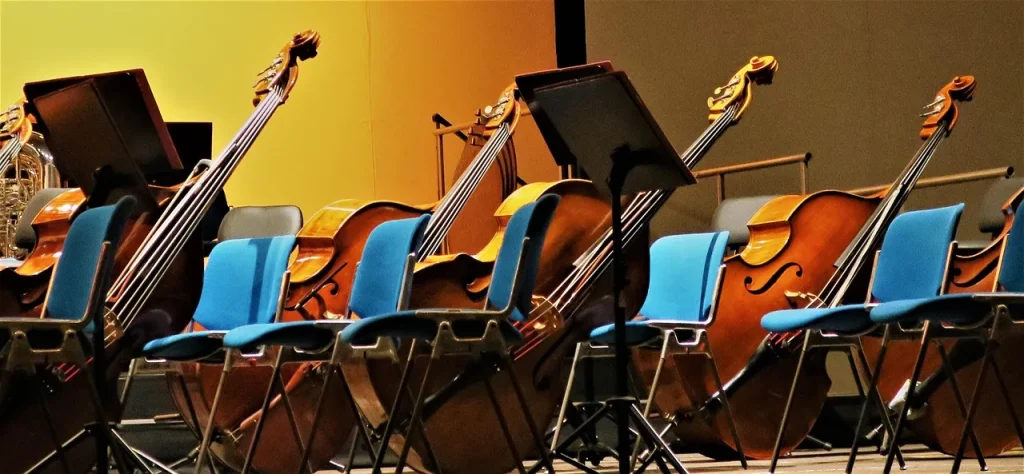
Sharing playful moments centered on sound is an excellent way to strengthen family bonds. Early musical development supports cognitive and sensory development from a very young age.
Adapt these experiences to your children’s ages (1–12 years) using simple materials. Everyday or recycled objects are all you need to make homemade instruments.
Consider equipping your child with suitable headphones for certain experiments. This protects their ears while allowing them to explore different sound worlds safely.
Introduction: early musical development as a family
Exploring the world of sound together creates lasting memories while developing essential skills. This introduction can begin in the first few months of life through age-appropriate approaches.
Why introduce children to music?
Neuroscience confirms that exposure to sounds before the age of 7 activates lasting connections in the brain. In particular, it improves:
- Hand-eye coordination
- Auditory discrimination
- Long-term memory
Rhythm games also strengthen fine motor skills. Tapping, striking, or shaking objects in time improves the precision of their movements.
Recommended basic equipment
Here is a selection of tools suited to each age group:
| Age | Instruments | Average budget |
|---|---|---|
| 1–3 years | Maracas, sound-making rattles | €15–25 |
| 4–6 years | Xylophone, tambourine | €20–35 |
| 7–12 years | Flute, metal claves | €30–50 |
Safety tip: always choose specialized headphones with a built-in limiter (85 dB maximum). This protects hearing while allowing complete immersion.
The key is to vary the experiences: handling sound-making objects, movement games, or active listening to a range of musical soundscapes.
1. Classic rhythm games
Turning your living room into a musical stage stimulates the creativity of children and adults alike. These exercises combine coordination and listening and are perfect for an entertaining afternoon.
A modern version of musical chairs
Revisit this timeless game with a technological twist. Use a smart speaker to control the music with voice commands.
- Add a “statue” variation: the children must freeze in a funny pose when the music stops.
- Ideal for a group of 4 to 6 participants.
The forbidden rhythm with homemade percussion
Make instruments from tin cans and wooden spoons. It is an inexpensive way to explore sounds.
The principle: one rhythm is forbidden. When someone plays it by mistake, that participant acts out an animal. It is a simple and effective activity for developing auditory memory.
Variation: follow the conductor
The children take turns leading the group and setting the tempo. It is perfect for developing leadership skills.
Introduce musical dynamics (piano for soft and forte for loud) for an educational approach. According to one study, 78% of young children improve their coordination in 3 weeks with this game.
2. Making DIY instruments
Making instruments from everyday objects sparks children’s curiosity while developing their creativity. These workshops require few materials and are suitable from age 3 with adult supervision.
Maracas made from recycled bottles
Fill plastic bottles with different materials (rice, lentils, beads). Seal them with colorful adhesive tape to make them safe.
- Science experiment: compare the sound produced at different fill levels
- Avoid before age 3: choose large beads that cannot be swallowed
Tambourine made from paper plates
Join two plates together with jingle bells or metal bottle caps between them. Decorate them with markers or stickers to personalize them.
Tip: use rubber bands as handles to make them easier to hold.
Homemade kazoo for making music with your breath
Cut a circle from a sheet of parchment paper. Secure it over a toilet paper roll with a rubber band. The child blows into it while humming.
This simple equipment provides a practical way to explain sound vibrations.
“Musical crafts develop fine motor skills while teaching the fundamentals of acoustics.”
| Materials | Assembly time | Difficulty level |
|---|---|---|
| Reclaimed | 15 min | ★☆☆ |
| New | 25 min | ★★☆ |
These homemade instruments offer a first hands-on introduction to producing sound. Consider organizing a mini family concert to showcase the creations!
3. Dance and movement games
Combining movement and sound creates an enriching multisensory experience. These shared moments engage the whole body while developing a sense of rhythm.
Musical statues
Adapt this classic using a variety of music. When the sound stops, each child must freeze in an original pose.
- Add themes: animals, superheroes, or emotions
- Use well-known hits such as “Baby Shark” to motivate young children
- Variation: the statues must repeat the last action performed by the leader
Rhythmic balloons to keep in the air
Choose lightweight sensory balloons. Hit them in time with simple rhythms counted aloud.
For children with sensory sensitivities, choose textured models. This adds a tactile dimension to the experience.
Musical hoops for developing coordination
Arrange colorful hoops on the floor. Whenever the melody changes, the children must move to a different hoop.
Number them to create combinations: “Hoop 3 to a slow rhythm.”
| Activity | Recommended duration | Energy used |
|---|---|---|
| Musical statues | 10 min | 50 kcal |
| Rhythmic balloons | 15 min | 80 kcal |
| Musical hoops | 20 min | 100 kcal |
Tip: alternate playlists (jungle, space, and so on) to maintain interest. These games engage the whole body while refining the ability to hear rhythms.
4. Activities using children’s headphones
Using children’s headphones opens up a world of safe sound experiences. This ideal solution provides complete immersion without risking children’s hearing.
Choosing the right equipment
Several criteria ensure safety and comfort:
- Built-in volume limiter (85 dB maximum)
- Hypoallergenic, adjustable ear cushions
- NF EN 71-3 material standard
Choose specialist brands such as BuddyPhones or JBL. Their ergonomic designs adapt to the shape of young heads.
Educational name-that-tune game
Turn listening into a fun challenge with this variation:
- Prepare excerpts from different musical styles
- Ask the children to identify the instruments or emotions
- Add visual clues for younger children
This game develops concentration and musical knowledge. Alternate classical and contemporary pieces to keep things varied.
Family sound library
Create an age-appropriate collection containing:
| Type | Ideal duration | Benefits |
|---|---|---|
| Audio stories | 10–15 min | Imagination |
| Nature sounds | 5–10 min | Relaxation |
| Nursery rhymes | 8–12 min | Memory |
The WHO recommends sessions lasting no more than 30 minutes for children aged 3–6. Consider creating a comfortable listening corner in the play room.
“Well-chosen headphones become a valuable educational tool for developing auditory awareness.”
Recommended educational apps:
- KiddoZ – Discovering instruments
- SoundTouch – Interactive sound library
- MusiQuest – Musical adventure
5. Sensory exploration
Refining hearing from a very young age creates a solid foundation for cognitive development. Everyday sounds then become fascinating educational tools.
Sound memory game with instruments
This classic game develops auditory discrimination. Hide various instruments and ask the children to identify them by ear.
- Start with 3 distinct sounds (bell, drum, whistle)
- Gradually increase the difficulty
- Include household objects (glass, keys)
Guess the resonating object
An activity inspired by the Montessori method. Shake or tap objects hidden in a box.
The children must guess what they are from the sound they produce. It is perfect for developing concentration.
Everyday sound-matching game
Use a toy recorder to create matching pairs of identical sounds. The children must find the auditory matches.
This version stimulates memory while enriching their sound-related vocabulary.
| Activity | Skills developed | Ideal duration |
|---|---|---|
| Sound memory game | Auditory discrimination | 10 min |
| Resonating objects | Associative reasoning | 15 min |
| Sound-matching game | Short-term memory | 20 min |
“Regular auditory training improves memory skills by 40% in one month.”
These games turn learning into a sensory adventure. They can be adapted to all ages simply by changing the complexity of the sounds used.
6. Collaborative music-making
Turning your kitchen into a recording studio encourages teamwork. This activity develops creativity while strengthening family bonds.
Family composition on a tablet
Introduce your children to the basics of computer-assisted music using intuitive apps:
- GarageBand (iOS) for creating simple mixes
- Soundtrap (cross-platform) with collaborative features
- BandLab for easily sharing creations
Each member of the group can add a personal touch. Younger children tap out the rhythm, while teenagers handle the melodies.
Improvised kitchen orchestra
Turn kitchen utensils into instruments with this easy tutorial:
- Metal plates for cymbals
- Filled bottles for percussion
- Wooden spoons as drumsticks
This activity meets the need for self-expression without requiring an expensive investment. A real concert for the whole family!
Recording a homemade song
Create your first family single in 5 steps:
| Step | Equipment | Duration |
|---|---|---|
| Writing the lyrics | Pencils, paper | 20 min |
| Recording the vocals | Smartphone | 15 min |
| Adding instruments | Everyday objects | 25 min |
“Making music as a family develops mutual listening and self-confidence.”
Organize a competition with a judging panel (grandparents, neighbors) to motivate the group. Then share your work on secure platforms such as FamilyAlbum.
These projects meet the need to share words and notes in an increasingly connected world. An experience to enjoy together!
7. Vocal and singing games
Set your family’s voices free with vocal games that spark creativity. These activities develop self-confidence while refining the musical ear. Adapt the difficulty to the participants’ ages for joyful moments together.
Themed family karaoke
Turn your living room into a performance space with a selection of 10 traditional songs. Organize themed evenings (seasons, animals, emotions) to stimulate the imagination.
Example of a 4-week progression:
| Week | Style | Goal |
|---|---|---|
| 1 | Classic nursery rhymes | Memorization |
| 2 | Call-and-response songs | Interaction |
| 3 | Family duets | Coordination |
Improvising with simple rhymes
Learn the ABC (Alternate Bass Construction) technique using everyday words. Start with easy rhyming sounds to make the exercise simpler.
A practical example: create a verse about breakfast by alternating syllables. This method develops verbal fluency while keeping the activity fun.
Action songs for young children
Match body movements to the lyrics for a multisensory experience. Use simplified sign language with familiar choruses.
Make decorative masks to overcome shyness. They help quieter children express themselves freely in front of the group.
“Vocal games develop the ability to distinguish sounds and sing in tune from a very young age.”
These activities turn vocal learning into a collective adventure. They strengthen language skills while creating unique musical memories.
8. Quiet listening activities
Offer moments of musical relaxation that soothe the mind while awakening the senses. These activities require little equipment and are suitable from age 2. They promote concentration and emotional regulation.
Drawing to classical melodies
Let the notes guide the pencils with this Vivaldi-inspired method. Use pastels to express the emotions experienced.
- Match colors and tempos: blue for slow movements, red for allegros
- Encourage listening with eyes closed during the opening bars
- Display the finished artwork to celebrate artistic expression
Guided sound relaxation
Introduce your children to 4-7-8 breathing with a Tibetan singing bowl. This simple process has 3 stages:
- Inhale for 4 seconds with a low sound
- Hold for 7 seconds in silence
- Exhale for 8 seconds, accompanied by a clear note
20 minutes is enough to produce a lasting calming effect. It is perfect before bedtime.
Outdoor listening walk
Create a sound map of your surroundings with this educational game:
| Natural element | Characteristic sound | Associated activity |
|---|---|---|
| Leaves | Rustling | Counting variations |
| Birds | Chirping | Identifying species |
| Wind | Whistling | Measuring intensity |
“Active listening develops selective attention and reduces stress in 89% of children.”
These shared moments create memories while refining auditory perception. Adapt the duration to each person’s age and attention span.
9. Educational music games
Educational sound games turn abstract concepts into tangible experiences. They simultaneously develop concentration and memory while introducing the fundamentals of music.
Learning notes through colors
This method, adapted for children with dyscalculia, associates each note with a specific color. For example: C = red, D = yellow, E = green.
- Printable kit with color-coded sheet music
- Magnetic counters for composing on a board
- Adhesive labels for instruments
The materials include flash cards and a teaching guide. They are easy to set up and produce quick results.
Musical Sudoku for beginners
Inspired by puzzles in J’aime lire magazine, this game replaces numbers with notes. It is ideal for developing logic and absolute pitch.
“Sound Sudoku develops analytical skills while familiarizing children with scales.”
Start with 3 × 3 grids before moving on to more complex formats. It is perfect for car journeys.
Mathematical rhythm course
Combine mental arithmetic and beats with this innovative course:
| Calculation | Movement | Duration |
|---|---|---|
| 3 + 2 | 5 jumps | 3 seconds |
| 4 × 2 | 8 claps | 5 seconds |
One study reports a 35% improvement in arithmetic after 2 months of practice. Concentration peaks during rapid sequences.
These activities prove that learning notes can be fun and effective. Adapt the difficulty level to maintain interest over time.
10. Organizing a musical celebration
End your week on a high note with a memorable celebration of sound. This original party combines creativity and sharing to create unique moments.
Checklist for a successful show
Plan your event by following these key steps:
- Choose a theme (jungle, space, stories)
- Prepare a balanced program lasting no more than 30 minutes
- Make accessories from recycled materials
Here is an example schedule:
| Time | Activity | Equipment |
|---|---|---|
| 5 min | Percussion opening | Filled bottles |
| 10 min | Action songs | Decorative masks |
Clever sound-making costumes
Turn costumes into instruments with these ideas:
- Attach jingle bells to hats
- Use aluminum foil to produce metallic effects
- Add ribbons with musical beads
These ideas stimulate the imagination while developing auditory awareness.
Creative invitations
Surprise your guests with cards shaped like:
- A giant treble clef
- A personalized musical note
- A miniature score featuring the program
“An original invitation sets the tone for the event and sparks curiosity.”
Do not forget recycled trophies to recognize every participant. A successful party creates memories that resonate for a long time!
Conclusion: nurturing a love of music
The benefits of these moments resonate far beyond childhood. One study shows that 72% of children exposed to music before the age of 6 years retain this auditory sensitivity as adults.
To maintain enthusiasm, alternate the activities each week. Channels such as Early Musical Development offer progressive challenges suitable for the home.
As Léa, a mother of twins, says: “These games transformed our evenings.” Share your creations with #FamilyMusic to inspire other parents.
The adventure is only beginning: let music grow with your children!