
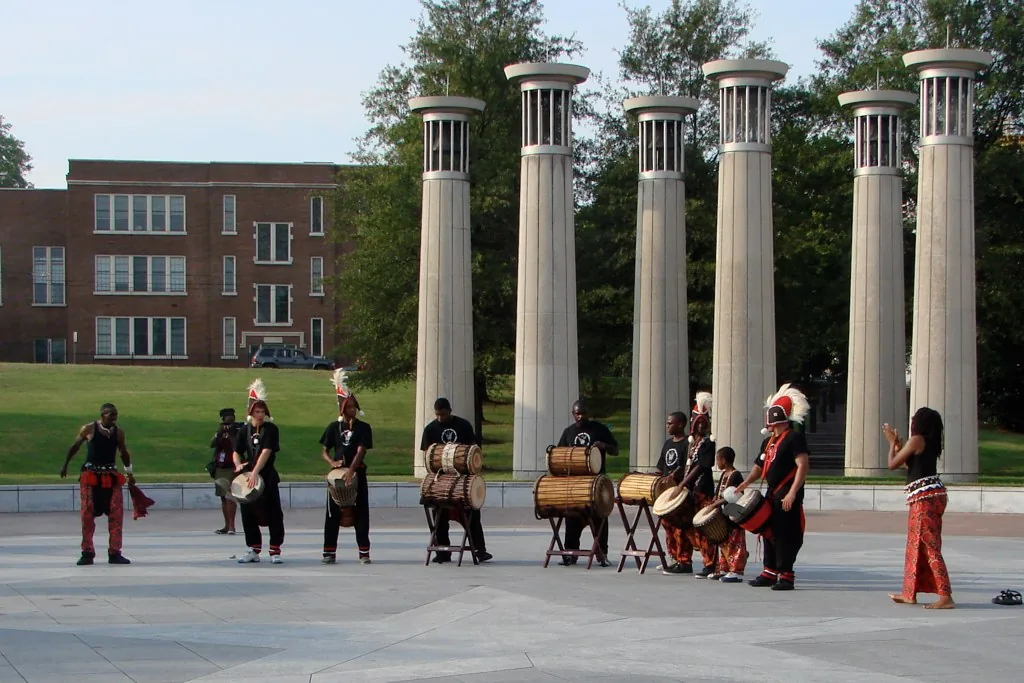
The djembe market is vast and varied, offering a multitude of options for every budget. Prices can range from around fifty euros for compact models to more than €1,000 for high-end instruments. This variety allows everyone, whether a beginner or an experienced musician, to find the right instrument.
The size of a djembe plays a crucial role in its cost. The larger the instrument, the more materials it requires, such as wood and hide, which increases its price. Retailers such as La Baguetterie offer a wide selection for every budget.
This buying guide will help you understand how to navigate this maze of prices. We will discuss quality criteria, materials, and brands so that you can make an informed choice. Whether you are a novice or an enthusiast, the djembe is much more than a simple drum: it is an instrument rich in history and musical traditions.
History and origins of the djembe
The djembe, an iconic instrument in West African music, has a rich and fascinating history. Originating several centuries ago, it is deeply rooted in the culture of the communities where it was born. This instrument is not only a drum, but also a vehicle for traditions and rituals.
Its West African birthplace
Originating in Mali, the djembe is also widely played in Guinea, Ghana, Côte d’Ivoire, and Burkina Faso. Its traditional construction uses a solid wood shell, often mahogany, carved by hand. The goatskin, tensioned with ropes, gives this instrument a unique sound, with deep bass tones and brilliant highs.
Historically, the djembe provided the rhythm for ceremonies, dances, and community gatherings. It enabled ancestral rhythms to be passed down from generation to generation, thereby strengthening social and cultural ties within communities.
The djembe’s international spread
In the 1950s and 1960s, the djembe began to travel beyond Africa thanks to master percussionists such as Mamady Keïta and ensembles such as the Ballet Africain. These artists played an essential role in popularizing this instrument worldwide.
Today, the djembe is a universal instrument, found in specialist stores around the world. It is taught in many music schools and incorporated into various musical genres, from jazz to contemporary music. Every day, new enthusiasts discover this instrument and commit to carrying on a rich and vibrant tradition.
The key factors that influence the price of a djembe
When choosing a djembe, several key criteria influence its cost. Understanding these factors will help you make a wise choice and invest in an instrument that meets your needs.
Size and weight: their impact on price and playability
The size of a djembe has a direct impact on its price. Here are a few points to consider:
- A 7-inch (18 cm) diameter is ideal for children or recreational use.
- Models measuring 12 or 13 inches (30 to 33 cm) are the most common, offering a perfect balance between sound power and comfort.
- Large sizes, ranging from 14 to 18 inches, deliver deep bass tones but require a larger budget and good physical fitness.
- Weight, which is often overlooked, is crucial: a large solid-wood djembe can weigh more than 10 kilograms, affecting transport and playing comfort.
Shell materials: traditional woods and modern materials
The choice of shell material is also decisive. Traditional African woods include:
- Lingue (Afzelia africana): the most highly regarded wood, offering a rich sound.
- Dugura, Djala, and Gueni: each has unique tonal characteristics.
- Mahogany: an excellent balance between tonal warmth and affordability.
In addition, modern materials such as fiberglass and composite resin are gaining popularity. They are lightweight and resistant to climate variations, making them practical for regular use.
Head type: natural or synthetic, and its influence on sound and cost
The type of head used on a djembe directly influences its sound and cost. The available options are:
- Natural goatskin: it provides the traditional warmth and richness prized by purists.
- Synthetic heads: they provide tuning stability and crisp slaps, making them ideal for performances.
The quality of the head, whether natural or synthetic, largely determines the instrument’s sound performance. This can be a decisive factor in your final choice.
In short, understanding these essential criteria will enable you to make an informed choice. Whether for occasional use or intensive practice, investing in a drum suited to your needs is essential.
What does a djembe cost based on its quality? Price ranges and budgets
The djembe market is divided into several price ranges, allowing every musician to find a suitable instrument. This variety of choice is essential to meet users’ diverse needs, whether they are beginners or experienced musicians.
Entry-level djembes: prices and features
Entry-level djembes start at €50. These models, often measuring 7 inches, are ideal for children and beginners. They are generally made from mahogany or composite materials and fitted with synthetic heads. This gives them an adequate sound for learning.
These instruments offer a first experience of percussion without requiring a major investment. They are perfect for early music education or introductory lessons.
Mid-range models: good value for money
Mid-range models, priced between €100 and €300, offer an excellent compromise. These djembes, with diameters of 10 to 13 inches, are often made of higher-quality wood and fitted with high-performance natural or synthetic heads.
This range is suitable for amateur percussionists seeking a richer sound and greater durability without moving into a professional-level budget.
High-end and professional instruments: performance and prices
High-end instruments, starting at €240, can cost more than €1,000. They deliver exceptional sound thanks to the use of fine woods such as Lingue or Diala, as well as selected natural goatskins.
For example, a 38 cm lingue-wood djembe costs around €520, while a premium Diala-wood model costs €790. For the most demanding players, a Prestige pack in black cassia wood with a case can cost as much as €1,500.
Signature models, such as the DJEMBE REMO 18 Tunable – Leon Mobley, represent the pinnacle of quality and deliver optimal stage performance.
The choice of model depends directly on the musician’s experience, frequency of use, and playing context: leisure, lessons, stage, or recording. Every range has its place: a beginner does not need a €1,000 instrument, but a professional cannot settle for an entry-level model for performances.
| Type of djembe | Approximate price | Features |
|---|---|---|
| Entry-level | From €50 | 7-inch models made of mahogany or composite materials, with synthetic heads. |
| Mid-range | €100 to €300 | Diameters of 10 to 13 inches, higher-quality wood, natural or synthetic heads. |
| High-end | From €240 | Fine woods, natural goatskins, handcrafted construction. |
Recommended brands and models by budget and skill level
There are numerous brands and models in the world of percussion. Every musician, whether a beginner or an experienced player, can find a suitable instrument. Choices vary according to budget and experience.
African artisanal brands: authenticity and craftsmanship
African artisanal brands stand out for their authenticity and traditional expertise. Some notable examples include:
- Kangaba (Mali): specializing in djembes made with local woods and natural hides, this brand embodies tradition.
- Wassoulou (Mali): faithful to ancestral methods, it offers instruments of outstanding sound quality.
- Yoman (Ghana): renowned for its woodworking, it offers unique and robust djembes.
These artisanal makers guarantee instruments with unique character, shaped by hand according to traditions passed down from generation to generation.
International brands: innovation and variety
International brands also dominate the market with notable innovations:
- Meinl (Germany): a global benchmark, it offers complete series ranging from student models to professional djembes.
- Remo (United States): a pioneer in synthetic heads, it offers signature models such as the Leon Mobley, designed for the stage.
- Tanga (France): offering excellent value for money, it is ideal for learning.
- Toca (United States): known for its varied, affordable designs, it combines craftsmanship and modernity.
- GEWA (Germany): it offers reliable and affordable djembes, perfect for music schools.
These brands allow musicians to choose from a wide range of instruments suited to every skill level.
Choosing a djembe according to your level and intended use
A djembe should be chosen according to your experience and intended use:
- For a beginner, a robust, affordable student model is recommended.
- An experienced percussionist will seek the tonal richness of a handcrafted instrument.
- A professional will invest in a high-end model for stage performances.
The context of use, whether for leisure, lessons, the stage, or recording, also influences the choice of brand and model. The Web makes it easy to compare models and find the ideal instrument in just a few clicks.
| Type of djembe | Recommended brands | Features |
|---|---|---|
| Entry-level | Kangaba, Tanga | Affordable, lightweight models, ideal for beginners. |
| Mid-range | Meinl, Toca | Better projection, playing comfort, solid wood. |
| High-end | Remo, Wassoulou | Exceptional finishes, rich sound, handcrafted instruments. |
Practical advice for choosing the right djembe
Choosing a djembe requires careful thought about several aspects. Every musician, whether a novice or an experienced player, should define their needs before investing in this instrument.
Defining your needs according to experience and intended use
Before buying, it is essential to determine how you intend to use your djembe. This includes:
- For a beginner, a robust, affordable student model is recommended.
- An experienced percussionist will seek the tonal richness of a handcrafted instrument.
- A professional will invest in a high-end model for stage performances.
Each level of experience requires specific features. The intended use (leisure, lessons, concerts) also influences the choice of size and the required sound quality.
The importance of weight and transport
The weight of a djembe is an essential consideration, especially for traveling musicians. A small 7-inch model is easy to transport. By contrast, a large 14- to 18-inch solid-wood djembe can weigh more than 10 kilograms, which becomes restrictive when traveling frequently.
For mobile use or lessons at a music school, choosing lighter models made of composite materials or less dense woods makes everyday transport easier.
Accessories and maintenance to preserve quality
Accessories are essential for protecting and optimizing your instrument. Here are a few items to consider:
- Padded carrying cases to prevent impacts.
- Tuning systems to keep the instrument in tune.
- Learning methods: books, DVDs, and online programs.
Regular maintenance preserves the djembe’s quality and longevity. A natural goatskin requires special attention when temperature and humidity vary, while a synthetic head offers greater stability.
The wood of the shell must also be protected: avoid impacts and prolonged exposure to sunlight or moisture, and occasionally apply a suitable care product.
Several complementary methods are available for learning the djembe: private lessons for personalized guidance, YouTube videos for discovering basic rhythms, structured online programs, or enrollment in a music school to play in an ensemble.
Specialist stores such as La Baguetterie or African Djembes & Handcrafted Percussion offer personalized advice and a complete range of accessories for every musician.
Taking the time to research online, compare models, and read reviews from other percussionists helps you avoid mistakes and find the ideal drum.
A well-chosen, well-maintained djembe can provide years of musical enjoyment and become a faithful companion as you explore the richness of African percussion.
Conclusion
The world of djembes is as rich as it is varied, with options suited to every musician. Whether you are a beginner or a seasoned percussionist, it is crucial to choose an instrument that matches your budget and musical aspirations.
Prices can range from €50 for entry-level models to more than €1,500 for high-end instruments. This diversity allows you to explore unique sounds, whether they come from traditional woods or natural goatskins.
To make the right choice, do not hesitate to try several models and seek advice from experts at specialist stores such as La Baguetterie or African Djembes & Handcrafted Percussion. With careful selection and proper maintenance, your djembe will accompany you on your musical journey for many years.