

Woody Guthrie, an iconic figure in folk music, made history with his album Dust Bowl Ballads. A record of the Great Depression, this album describes the hardships endured during that dark period. Among its songs, The Great Dust Storm stands out for its poignant account of April 14, 1935, a day when the sky darkened over several American states.
In 2021, the album was reissued under the title Home In This World, under the direction of producer Randall Poster. This version connects the past with the present by featuring collaborations with contemporary artists such as Lee Ann Womack and Waxahatchee. It serves as a reminder of this music’s importance as a record of ecological and migration crises.
The Dust Bowl profoundly affected agriculture and forced thousands of people to migrate. These issues still resonate today, particularly through initiatives such as Kiss The Ground, which seeks to transform modern agricultural practices.
Introduction to The Great Dust Storm and its historical context
In the midst of the 1930s, an unprecedented ecological crisis struck America. The Dust Bowl, a period of intense drought and soil erosion, devastated the central plains of the United States. This disaster not only ruined agriculture but also forced thousands of people to leave their land.
The origins of the song
Inspired by these tragic events, the song *The Great Dust Storm* tells the story of April 14, 1935, a day when the sky darkened because of an immense dust storm. Woody Guthrie, then a young artist, used his music to document the suffering of farmers and workers. His voice became an echo of the struggles of that era.
The Dust Bowl: an ecological and human disaster
The Dust Bowl was caused by a combination of factors:
- Agricultural overexploitation encouraged by the slogan “Wheat will win the war.”
- Federal subsidies, which accelerated soil degradation.
- Extreme weather conditions, including scorching summers and violent winds.
These factors turned fertile land into deserts, forcing thousands of families to migrate to California.
Woody Guthrie, witness and chronicler of his time
Living in Los Angeles in the 1930s, Woody Guthrie witnessed the consequences of the Dust Bowl firsthand. His songs, such as *The Great Dust Storm*, captured the hopes and disillusionment of migrants. Through his lyrics, he criticized agricultural policies and denounced social injustice. His work remains a powerful record of this dark period.
Analysis of the themes in The Great Dust Storm
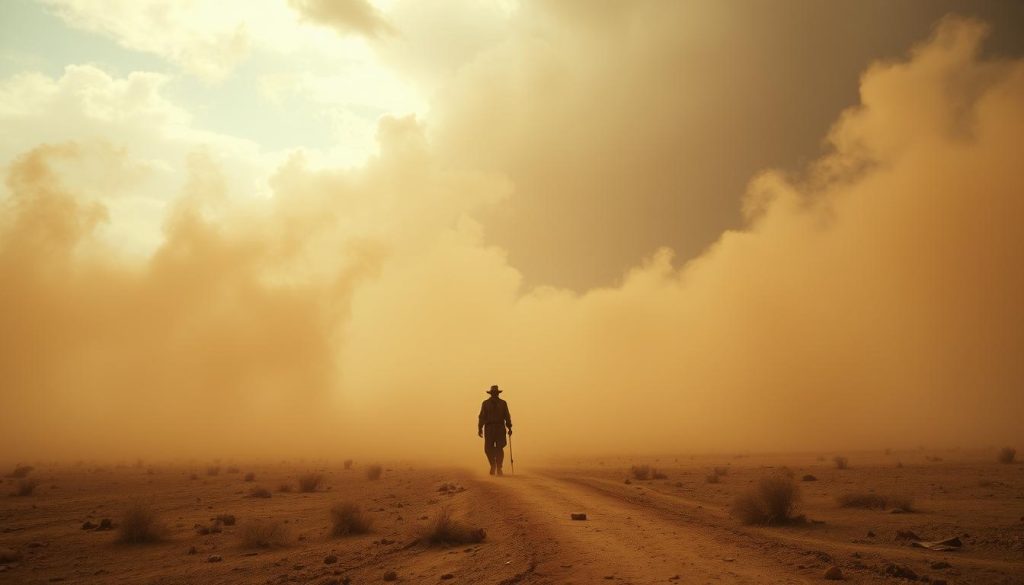
A dust storm forever changed the fate of thousands of families. This disaster, symbolized by the song *The Great Dust Storm*, reveals profound themes relating to survival, migration, and social criticism.
The struggle for survival on the devastated plains
Farmers had to contend with extreme conditions. The omnipresent dust symbolized economic collapse and the loss of resources. Accounts from the period describe families struggling to feed themselves and protect their children.
The song’s lyrics evoke this despair:
“Rain quit and the wind got high, And a black old dust storm filled the sky.”
These words illustrate their helplessness in the face of nature unleashed.
The migration of the “Okies” and their quest for a better life
The term Okies, originally derogatory, became an emblem of resilience. Thousands of people left their land in search of a place where they could start over. California seemed like a promised land, but many encountered shantytowns and precarious living conditions.
This mass migration is well documented in Dorothea Lange’s photographs, which depict rural poverty. To learn more about the impact of this period, read this in-depth analysis.
Social and political criticism in the lyrics
The song denounces the slow pace of New Deal reforms. Farmers were waiting for concrete solutions, but agricultural policies were slow to address their needs. Guthrie criticizes this inertia in forceful lyrics.
His music, like that of other folk artists, influenced the social movements of the era. To understand this legacy, explore this article about folk music.
The impact of The Great Dust Storm on American culture
Woody Guthrie’s music has transcended the decades, leaving an indelible mark on American culture. His songs, particularly *The Great Dust Storm*, captured the essence of an era shaped by struggle and resilience. This work remains a powerful testament to the economic and ecological challenges of the Dust Bowl.
An iconic song of the Great Depression
This song became a symbol of the Great Depression. It recounts the hardships of farmers faced with the loss of their resources and land. Its simple yet powerful lyrics still resonate today as a reminder of the consequences of ecological crisis.
Guthrie’s collection of ballads, which includes this song, documented a crucial period in American history. To learn more about this era, read this in-depth analysis.
Guthrie’s influence on folk and protest music
Guthrie influenced many artists, particularly in the field of folk music. His social and political commitment inspired generations of musicians, including Bob Dylan and Bruce Springsteen. His work played a key role in the development of protest movements.
His ability to combine personal narrative with social criticism marked a turning point in music history. Today, podcasts such as “Broken Record” continue to celebrate his legacy.
The song’s legacy in collective memory
The legacy of *The Great Dust Storm* is undeniable. Modern reinterpretations, such as the Felice Brothers’ 2021 version, show that this song remains relevant. It is also used in documentaries, such as Ken Burns’s film about the Dust Bowl.
This collection of works continues to be studied and celebrated in museum exhibitions and educational programs alike. Guthrie succeeded in building a bridge between the past and the present, reminding us of the importance of art as a tool of remembrance.
Conclusion: the relevance of The Great Dust Storm today
The lessons of the past still resonate today, particularly through modern ecological crises. Current droughts and wildfires recall the challenges of the Dust Bowl, underscoring the importance of sustainable agricultural practices.
Initiatives such as regenerative agriculture, promoted by Kiss The Ground, draw inspiration from Howard Finnell’s techniques. These methods aim to restore soil and prevent future disasters.
Music also plays a key role in environmental movements. Collaborations such as the one with Waxahatchee show how art can raise awareness and mobilize people in response to the climate emergency.
Finally, the lessons of the past must inspire sustainable agricultural policies. Faced with climate migration, the new “Okies” of the twenty-first century deserve concrete solutions to find their place in a changing world.