
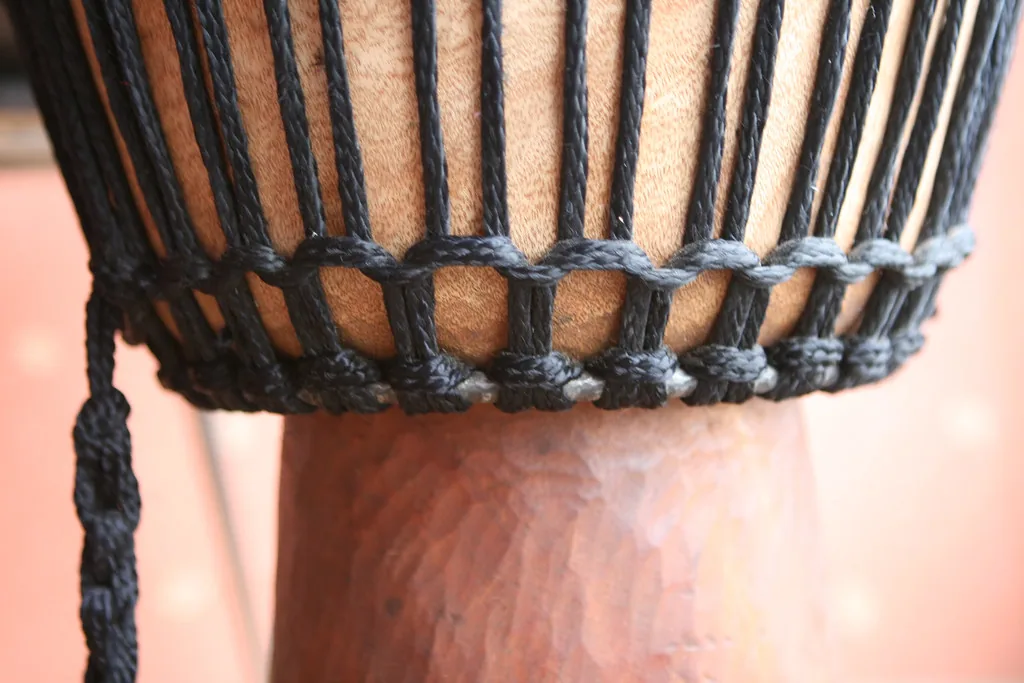
The djembe is an iconic West African instrument, known for its powerful sound and rhythmic richness. It has captivated the world since the 1950s thanks to African ballet companies. Today, it is enjoyed by many percussionists, from beginners to experienced players.
Choosing a djembe is a crucial step. A well-chosen instrument can transform your musical experience. This guide will help you navigate essential criteria such as your body type and budget.
It is important not to rush. A poor choice can hinder your progress and cause physical strain. You will also discover the differences between traditional solid-wood models and modern versions made from synthetic materials.
1. Introduction: Why Is It Important to Choose the Right Djembe?
The djembe, a vibrant symbol of African culture, plays a central role in musical learning. Choosing it carefully is crucial to ensuring a rewarding experience. An unsuitable instrument can cause frustration and pain, thereby slowing your progress.
The djembe market is vast, with options ranging from entry-level models costing less than €50 to handcrafted pieces priced above €300. Knowing how to identify quality criteria is essential to avoid counterfeits.
It is also important to consider your body type. A djembe that is too large or too heavy can strain your back and shoulders, reducing your playing comfort. The right choice makes playing music more enjoyable.
The quality of the materials, particularly the wood and drumhead, influences the instrument’s sound. A well-made djembe can retain up to 70% of its value after three years if properly maintained.
Investing in a djembe is more than a simple purchase. It is a commitment to your musical development. Taking the time to choose carefully prevents premature replacements and can save money in the long term.
Finally, beginners often underestimate how their choice of instrument affects motivation. A good-quality djembe, even a mid-range one, can make the difference between giving up and developing a lasting passion for African percussion.
2. Origins and History of the Djembe
The history of the djembe dates back to the 13th century, marking the beginning of a rich musical tradition. This iconic instrument originated in regions of Guinea, Mali, Burkina Faso, and Côte d’Ivoire. It was used for much more than making music. It accompanied traditional dances, transmitted coded messages between villages, and set the rhythm for major community ceremonies such as weddings and funerals.
The djembe was inseparable from a broader polyrhythmic ensemble that included dundun drums. Its name is thought to come from the Bambara expression “Anke djé, anke bé,” meaning “everyone gathers together in peace.” This reflects its unifying social role within West African communities.
The worldwide spread of this fascinating instrument truly began in the 1950s. Guinean president Sékou Touré used African ballet companies as a means of promoting the country’s culture. This allowed the djembe to move beyond Africa and conquer international stages.
The 1980s marked a decisive turning point. The djembe became familiar to Western audiences and was gradually incorporated into modern music, from jazz to world music. It became a popular percussion instrument in music schools and community workshops around the world.
Great traditional masters such as Mamady Keita, considered one of the greatest djembefolas of all time, and Famoudou Konaté, a guardian of traditional Malinké rhythms, established the foundations of a playing style characterized by profound musicality. They respect ancestral rhythms while producing powerful sounds.
A new generation of percussionists, including Harouna Dembélé and Petit Adama Diarra, is taking the technique to new levels of virtuosity and speed. They create increasingly complex breaks while remaining rooted in the traditional fundamentals that give the djembe its soul.
3. How to Choose a Djembe Suited to Your Skill Level: Essential Criteria
Choosing a percussion instrument may seem complicated, but it is essential to ensuring steady progress. Understanding your needs and skill level is the first step toward a rewarding musical experience.
3.1. Understanding Your Skill Level and Needs
Honestly assessing your current percussion skill level is crucial. A beginner will not have the same requirements as an intermediate or professional percussionist. This self-assessment will help you select a djembe that truly suits your musical practice.
Your specific needs should also guide your choice. If you mainly play indoors, a traditional wooden model with a goatskin head will be ideal for producing warm tones. A synthetic model, however, is better suited to outdoor rehearsals.
3.2. How Your Choice of Djembe Affects Learning
Your choice of instrument has a direct impact on your learning. A poor-quality djembe with an improperly tensioned head will produce mediocre sounds. This will hinder your musical development and striking technique.
According to experienced teachers, 90% of beginner students choose a model that is too large. This creates unnecessary shoulder strain and may cause them to give up playing. Testing the instrument before purchasing it is therefore essential.
When buying, check that there are no cracks in the djembe’s bowl. Some cracks in the base are normal and affect neither the sound nor its strength, especially with woods such as balafon wood, which change over time.
Finally, remember to anticipate your progress. Investing in a mid-range djembe from the outset may be more economical than buying a low-end model that will need replacing after a few months.
| Criteria | Importance | Impact on Learning |
|---|---|---|
| Player’s skill level | High | Choosing a suitable instrument |
| Type of wood | Medium | Sound quality |
| Checking for cracks | High | Instrument durability |
| Testing the instrument | High | Playing comfort |
4. Materials: Wood, Drumhead, and Rope
The quality of the materials used to make an instrument is essential to its sound and durability. Choosing the right materials ensures not only better sound but also a longer instrument lifespan.
4.1. Wood: Types and Quality
The choice of wood is vital. Favor dense, high-quality species. Lenke is highly valued for its ability to produce deep bass tones. Balafon wood, also called goni or hari, is lightweight and offers exceptional resonance, although it tends to split over time.
Diala, or mahogany, offers an excellent balance between density and weight and produces warm sounds. Dugura and iroko, two robust African wood species, provide remarkable durability.
To check the quality of the wood, examine the shell thickness, which should be at least 2 centimeters. Also make sure there are no cracks in the bowl, as wood changes over time.
4.2. The Drumhead: Material, Thickness, and Tension
The drumhead is crucial to sound quality. A good-quality goatskin head should be free of cracks and holes. It should be at least 2 millimeters thick to ensure clear tones.
It is important to remember that the drumhead is a consumable component. It is normal to have to replace it after several years of intensive use. This should not be regarded as a defect but as routine maintenance.
4.3. Rope: Its Importance for Tuning and Durability
The rope plays an essential role in tuning your instrument. A diameter of approximately 5 millimeters is recommended. High-quality pre-stretched nylon rope provides precise, lasting tuning.
Before purchasing, examine the instrument’s overall tension. Make sure the rings are properly balanced and that the rope shows no signs of excessive wear. Poor assembly can make tuning difficult.
| Materials | Type | Importance |
|---|---|---|
| Wood | Lenke, goni, diala | Sound and durability |
| Drumhead | Goatskin | Sound quality |
| Rope | Pre-stretched nylon | Precise tuning |
5. Djembe Size: Matching It to Your Body Type and Intended Use
The size of a percussion instrument plays a crucial role in the quality of the musical experience. To get off to a good start, it is essential to understand the standard sizes and how they affect the sound produced.
5.1. Standard Sizes and Their Sounds
Discover the three standard djembe sizes that dominate the market:
- Small: approximately 40 cm in diameter, it produces pronounced high notes and is ideal for frequent travel.
- Medium: at 50 cm, it offers the perfect balance between bass and treble for versatile playing.
- Large: at 60 cm or more, it delivers deep bass tones and is perfect for outdoor concerts.
A good-quality djembe has a standard height of around 60 cm and a minimum diameter of 33 cm measured across the outer wood. These dimensions are the result of centuries of craftsmanship development.
5.2. Choosing According to Your Body Type and Comfort
Learn how to choose your djembe’s size according to your body type:
- Shorter people should favor models measuring 40 to 50 cm.
- People of average height will be comfortable with models measuring 50 to 55 cm.
- Taller people will find greater stability with models measuring 60 cm or more.
It is important to test the instrument before buying it. Whether seated or standing, your arms should form an angle of approximately 90 degrees for optimal striking. Poor posture can cause shoulder and back strain.
5.3. Djembes for Children and Beginners
Avoid the common beginner’s mistake of choosing a djembe that is too small. Small models produce less resonant sounds and can make learning more difficult.
For children, sizes from 30 to 40 cm are suitable for toddlers aged 3 to 5, with a maximum weight of 2 kg. For children aged 6 to 8, choose models measuring 40 to 50 cm and weighing up to 3 kg. Instruments measuring 50 to 55 cm and weighing no more than 4 kg are suitable for children aged 9 to 12.
Choose djembes with rounded edges to prevent injuries and synthetic heads that maintain consistent tension. This provides a musical introduction suited to their body shape.
6. Budget: How to Invest Wisely in a Djembe
Investing in a percussion instrument such as a djembe requires careful consideration of your budget. Understanding the different price ranges is essential to making an informed choice.
6.1. Price Ranges and Expected Quality
The djembe market is divided into three main categories:
- Entry-level: between €50 and €100. These lightweight wooden models with standard drumheads are suitable for occasional beginners who want to explore percussion without spending too much.
- Mid-range: between €100 and €300. These solid-wood instruments offer better resonance and are ideal for regular players. Their goatskin heads are of good quality, ensuring several years of durability.
- High-end: from €300. Intended for professionals, these djembes are works of African craftsmanship made with premium materials and high-end drumheads for exceptional sound.
It is advisable to be wary of djembes costing less than €50, as they are often considered toy instruments unsuitable for serious learning.
6.2. Essential Accessories and Additional Costs
When investing in a djembe, it is also important to allow for additional costs:
- Carrying strap: between €20 and €50. A good strap is essential for transporting your instrument safely.
- Replacement drumhead: costing between €30 and €80 depending on quality, it is needed to maintain your djembe’s sound over time.
- Maintenance products: approximately €15 per year for oil and other wood-care products.
You should also budget for a carrying case to protect your djembe while traveling. Do not forget hearing protection if you play in confined spaces, as the volume can surprise beginners.
7. Practical Advice for Getting Started with Your Djembe
Learning percussion requires solid foundations and sound advice. With its rich sound, the djembe offers a unique experience. To get off to a good start, mastering a few basic techniques is essential.
7.1. Basic Techniques to Master
There are three fundamental sounds to learn:
- Bass: played in the center of the drumhead, it produces a low, deep sound.
- Tone: played with the hand flat against the edge, it produces a clear mid-range sound.
- Slap: created with a sharp strike using the fingertips, it produces a high, incisive sound.
These sounds form the foundation of all learning. Keep your hands and shoulders relaxed to avoid tension. A good strike should feel natural and fluid.
7.2. Common Mistakes to Avoid
Beginners often make the same mistakes. Avoid striking too hard, as this does not necessarily produce more volume. Pay attention to the position of your hands on the drumhead. Do not attempt complex rhythms before mastering the three fundamental sounds.
7.3. The Importance of Consistency and Enjoyment
To progress quickly, play regularly—ideally every day—even if only for short sessions of 15 to 20 minutes. Consistency is more important than the length of practice sessions.
Joining an African percussion group is also beneficial. It will help you understand the djembe’s role within a polyrhythmic ensemble. Listen to recordings of traditional rhythms to develop your ear.
Finally, always keep enjoyment at the heart of your practice. Vary your exercises and play along with music you enjoy. Set progressive goals to maintain your motivation.
| Advice | Description |
|---|---|
| Master the sounds | Learn the three fundamental sounds: bass, tone, and slap. |
| Correct posture | Keep your hands and shoulders relaxed to avoid tension. |
| Avoid mistakes | Do not strike too hard or neglect your hand position. |
| Practice regularly | Play every day to develop muscle memory. |
| Join a group | Playing with other musicians improves your rhythmic understanding. |
| Listen to rhythms | Immerse yourself in rhythmic structures to enrich your playing. |
8. Maintaining and Repairing Your Djembe to Make It Last
Regular maintenance is essential to preserve your instrument’s beauty and sound. A well-maintained djembe can provide years of musical enjoyment. This involves monitoring the quality of the drumhead and the condition of the wood, as well as making repairs when necessary.
8.1. Routine Maintenance
Adopt a regular maintenance routine for your djembe:
- Check the drumhead tension every month.
- Gently clean the surface with a dry cloth after each use.
- Avoid direct sunlight, which can dry out and crack both the drumhead and the wood.
8.2. Replacing the Drumhead: Key Steps
When the drumhead shows signs of wear, it is time to replace it. Follow these steps:
- Remove the old drumhead by carefully undoing the rope.
- Prepare the new drumhead by soaking it in water to soften it.
- Fit the new drumhead to the shell, making sure the rings are perfectly balanced.
- Gradually tension the wet drumhead without tightening it all at once.
- Wait until it is completely dry before applying the final tension.
8.3. Preventing Cracks and Maintaining the Wood
To extend your djembe’s lifespan, apply protective oil to the entire shell once a year. Pay particular attention to the joints between the base and bowl, which are sensitive to changes in humidity and temperature. Store your instrument horizontally to preserve its shape.
Finally, regularly inspect the overall condition of the rope and rings. These components are under constant tension and can wear over time, affecting tuning stability and the quality of the sound produced by your djembe.
9. Recommended Models by Skill Level and Player Profile
Choosing the right instrument can greatly influence your musical experience. Here is a selection of models suited to different skill levels and musician profiles.
9.1. Djembes for Beginners
For those beginning their musical journey, choosing an instrument that makes learning easier is essential. Here are some recommended models:
- Thomann NN32: made in Côte d’Ivoire, this 62 cm model offers excellent value for money. Its well-tensioned natural drumhead produces rich sounds.
- Schallock 700.M: measuring 50 cm, this mahogany djembe produces balanced sounds that are perfect for mastering the three fundamental strokes.
- Afroton AD 007: ideal for children, this 40 cm model is lightweight and easy to handle while offering an attractive sound.
9.2. Instruments for Intermediate Percussionists
More advanced options are available for musicians who already have some experience:
- Afroton AD AV02: this 60 cm model, made in Ghana, features a shell carved from a single piece of wood and a goatskin head, producing warm bass tones.
- Toca Origins Wood Djembe: with its carved Celtic designs, this 40.5 cm mahogany djembe combines visual appeal with sound quality.
9.3. Professional and Specialized Options
Here are several high-end instruments for professional percussionists:
- Yoman MTL 002: made from tunebois, this instrument guarantees a powerful sound while remaining lightweight, making it ideal for performances.
- Meinl African Style Fire Series 10: with a hand-selected goatskin head, this model offers exceptional sound thanks to its mahogany wood carved using traditional Malian methods.
- Remo Advent Djembe: made from durable ABS plastic, this weather-resistant djembe is an ideal choice for outdoor rehearsals.
It is important to compare the different models according to your player profile. If you want an authentic sound, favor traditional solid-wood djembes. If robustness and ease of maintenance are your priorities, opt for modern synthetic versions.
| Model | Size | Features |
|---|---|---|
| Thomann NN32 | 62 cm | Excellent value for money, natural drumhead |
| Schallock 700.M | 50 cm | Mahogany, balanced sounds |
| Afroton AD AV02 | 60 cm | One-piece shell, warm bass tones |
| Yoman MTL 002 | Variable | Powerful sound, lightweight |
| Remo Advent Djembe | Variable | ABS plastic, weather-resistant |
10. Conclusion: Finding the Djembe That Will Accompany You on Your Musical Journey
A good instrument is the key to unlocking your musical potential. To find the djembe that will accompany you, several criteria must be considered. Choose a size suited to your body type to ensure optimal playing comfort. Select quality materials, such as dense wood and a thick goatskin head, to obtain a sound that enriches your musical experience.
Remember that every choice is an investment in your learning. It is better to spend a little more on a durable instrument than to make repeated purchases of lower-performing models. Be wary of counterfeits by checking the quality of the stitching and the origin of the drumhead.
Your musical journey starts here. This fascinating instrument will open the door to an infinite rhythmic world. Explore available resources such as online lessons and workshops to deepen your practice. Take care of your djembe, because proper maintenance will make it even more valuable over the years.
With this advice, you can confidently embark on your djembe adventure. You now have all the knowledge needed to make an informed choice and find the instrument that resonates with your musical personality.