
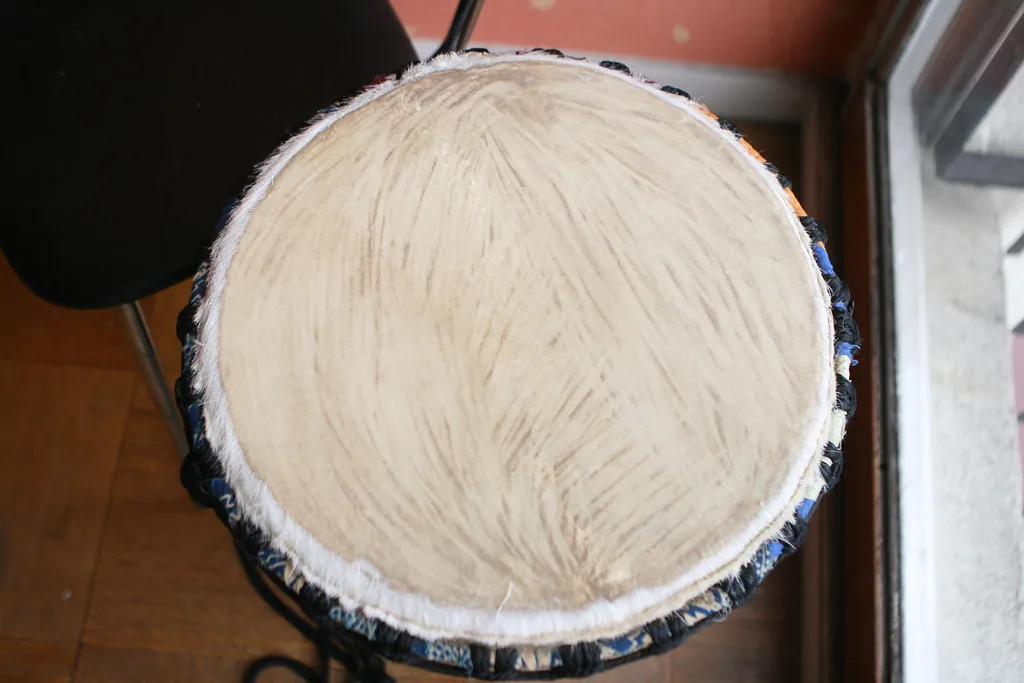
The djembe is an iconic West African percussion instrument. Its unique goblet shape sets it apart from other drums around the world. Carved from a wooden shell, it is covered with goatskin or antelope hide. Its tensioning system allows it to be played with bare hands, a rare feature among African percussion instruments.
Originating in the Mali Empire, the djembe is much more than a simple drum. It embodies a cultural symbol, a connection with ancestors and a bridge between peoples. Its exceptional tonal richness, which allows it to produce a wide range of timbres, makes it popular with musicians worldwide.
This ultimate guide will explore the different aspects of this instrument, from its construction and playing techniques to its cultural role and maintenance. Get ready to immerse yourself in the fascinating world of the djembe!
Introduction: the djembe, a musical and cultural symbol of West Africa
At the vibrant heart of West Africa, this instrument embodies rich and varied traditions. Created within the Mali Empire, also known as the Manding Empire, the djembe emerged in the 13th century during the time of Sundiata Keita. This empire extended from Guinea to eastern Mali and included northern Ivory Coast as well as Burkina Faso.
The Manding countries, including Guinea, Mali, Burkina Faso, Senegal, The Gambia and Ivory Coast, are the birthplaces of this instrument. The djembe is played by various ethnic groups, notably the Malinke, Khassonke, Bambara and Fula peoples. Each of these cultures has contributed to the wealth of traditions associated with this instrument.
Called “boté” by the Susu people of Guinea, the djembe is almost never played alone. It forms part of a polyrhythmic ensemble that includes instruments such as the doundounba, sangban and kenkeni. This harmony is essential for creating vibrant, compelling music.
The connection between the djembe and African dance is inseparable. The soloist’s rhythms accompany the dancers’ steps during ceremonies. Whether at agricultural rituals such as Kassa, sacred fishing festivals or religious celebrations such as Ramadan, the djembe plays a central role.
Each rhythm has a profound meaning expressed through percussion, songs and dances. This cultural depth enriches the musical experience and makes the instrument a true treasure of African heritage.
In the remainder of this article, we will explore the technical aspects of the instrument’s construction that contribute to its unique sound.
Technical description and construction of the djembe
The magic of the djembe lies in its unique design and fascinating history. This instrument is carved from a single piece of solid wood, forming three distinct sections. The head, facing the sky, is in contact with the skin, where the sound takes shape. The voice, the middle section, amplifies the sound and is often the focus of a special ceremony during its creation. Finally, the foot, facing the earth, acts as a sound amplifier.
The wooden shell: shape, wood species and construction
The djembe shell has an hourglass shape, giving it a rounded resonating chamber. This goblet shape influences the type of sound produced. A large chamber creates a bass djembe known as a “jembé ba,” while a narrower bowl produces a “jembé nin,” with a higher-pitched sound.
Various types of wood are used in its construction. These include teak, lengue, guéni, diala, dugura, redwood and mahogany. Each species influences the instrument’s sound, giving every drum its own unique richness.
Traditionally, djembe dimensions range from 45 to 65 cm in height and from 25 to 35 cm in diameter. The ceremony surrounding the creation of the voice is crucial to the quality of the sound.
The skin: materials, preparation and tension
The skin used is primarily goatskin, chosen for its flexibility and ability to produce warm sounds. Other hides, such as calfskin or cowhide, can make the sound harder and injure musicians’ hands.
The ropes and tensioning system
The tensioning system consists of three metal rings. One ring encircles the neck of the shell, while the other two are attached to the skin. These rings are connected by 2–3 mm prestretched halyard ropes. This material, also used by sailors, is highly durable and stretches very little, ensuring consistent tension.
Soloists often add seke-seke, a type of “metal ear” that resonates with the djembe’s vibrations, enriching the tone of the skin.
The construction quality of every part of the djembe, from the choice of wood to the preparation of the skin, directly influences the tonal richness and durability of this instrument.
How the djembe works: exploring sounds and playing techniques
The tonal richness of this instrument lies in the diversity of its sounds and the playing techniques associated with it. African masters pass on invaluable knowledge about how to produce these distinct sounds. Let us explore the three main sounds and the additional techniques that enrich djembe playing.
The three main sounds: bass, tone and slap
- Bass sound: this deep, low sound is produced by striking the center of the skin with the whole hand while keeping the thumb raised. It is crucial not to leave the hand resting on the skin, as this would muffle the sound.
- Tone: produced by striking the edge of the skin with the fingers held together, this midrange-rich sound requires both the thumb and palm to remain clear of the skin. To avoid unwanted metallic overtones, the stroke should remain brief.
- Slap: this high-pitched sound has two variations:
- Malian slap: the hand reaches forward in a cupped shape and strikes with the fingertips, with the thumb close to the rim, producing a dry sound.
- Guinean slap: the slightly spread fingers and one-third of the palm strike the skin, creating a more powerful sound.
Additional techniques and sound variations
In addition to the main sounds, other techniques enrich the instrument’s tonal range:
- Muted sound: a dampened sound produced by placing one hand on the skin to prevent it from vibrating while the other hand strikes.
- Flam: a miniature roll created by two very closely spaced strokes that almost overlap.
Mastering these techniques depends on the exact position of the hands, the size of the djembe and the length of the player’s fingers. Consistent practice is essential for perfecting these sounds.
From traditional to contemporary playing
Over the years, the djembe has evolved from its traditional setting to become part of contemporary music. Artists such as Noel “Toca” Rivera brought this instrument into pop rock alongside Jason Mraz, while Christina Goh has used it as the sole rhythmic instrument in blues and Afro-rock songs.
This evolution demonstrates the djembe’s tonal richness, enabling musical expression that ranges from traditional polyrhythmic accompaniment to the most virtuosic solos.
The djembe in culture and music: origins, evolution and transmission
At the heart of West African traditions, the djembe plays a fundamental role in the social and spiritual life of communities. Every rhythm, from the harvest-time Kassa to Ramadan celebrations, carries profound meaning. These rhythms are passed down through percussion, songs and dances, thereby enriching the local culture.
The role of the djembe in West African rituals and festivals
Among Manding ethnic groups, djembe playing is inseparable from rituals associated with agriculture, weddings, circumcisions and prayers. Every social or spiritual event is accompanied by specific rhythms that set the pace of community life. As a percussion instrument, the djembe structures the social and spiritual life of communities, strengthening the bonds among their members.
Its export and worldwide popularization
During the 1950s, the djembe began to spread beyond Africa thanks to Fodéba Keïta and the African ballets. Under the leadership of Sékou Touré, Guinea also played a crucial role by turning its national ballet into a cultural showcase. This initiative introduced the instrument to the entire world.
The 1980s marked a new stage in the djembe’s worldwide rise. Great djembefolas such as Mamady Keïta and Famoudou Konaté established learning centers in Europe, the United States and Japan. These masters successfully passed on authentic rhythms while adapting their playing to new musical settings.
Great masters and famous djembefolas
Among the djembe’s iconic figures, Mamady Keïta stands out as the best-known djembefola. Other notable masters include Amadou Kiénou, François Dembélé and Adama Dramé. Each contributed to the transmission and evolution of this musical instrument.
Knowledge is traditionally passed from master to student, thereby preserving the authenticity of the rhythms. Today, the djembe is much more than a simple percussion instrument. It has become a universal language that transcends cultural boundaries, bringing together communities of passionate players on every continent.
What is a djembe and how does this instrument work: practical guidance and advice for players
Every new student should master a few fundamental rhythms. These rhythms form the foundation of learning and help develop solid musical skills.
Advice for beginners: fundamental rhythms and learning
Here are a few basic rhythms and techniques that provide a starting point:
- Djembe Bass: a deep, resonant stroke produced with the palm in the center of the skin. This sound serves as the anchor for every composition.
- Tone: a clear sound produced by striking the edge of the skin with the fingers. This sound complements the bass to create more complex rhythmic patterns.
- Slap: a percussive stroke produced by quickly striking the skin with the fingers. This technique adds texture and dynamics to rhythms.
- Call and Response: a rhythmic pattern in which a leader plays a sequence and the other percussionists answer. This develops listening skills and group coordination.
- Traditional Rhythms: explore rhythms such as Kuku, Mendiani, Soli and Dununba. Each has its own character and history.
Maintaining the djembe to preserve its sound quality and durability
To ensure the longevity and sound quality of your instrument, follow these practical tips:
- Store the djembe in a dry place at a moderate temperature, away from excessive humidity and intense heat.
- Regularly clean the skin with a soft, dry cloth without using chemicals.
- Regularly tighten the ropes to maintain optimal tension and preserve the quality of the sound.
- Periodically moisturize the skin with water or vegetable oil to prevent it from drying out and cracking.
By following this advice, you will preserve your djembe’s tonal richness and durability over time. To learn more about studying the instrument and its playing techniques, read this article, which explores these topics in depth.
Conclusion
The djembe is much more than a simple percussion instrument; it reflects a rich and vibrant culture. Its unique shape, handcrafted construction and goatskin head make it an exceptional drum capable of producing a wide range of sounds.
This drum embodies the essence of West Africa, bringing people together through traditional and contemporary rhythms. Practical advice on maintenance and learning fundamental rhythms allows everyone to begin exploring this fascinating instrument.
Ultimately, the djembe transcends cultural boundaries and becomes a universal language of music and expression. Whether you are a musician or an enthusiast, now is the time to explore this cultural treasure and celebrate the diversity it represents.